
November 24, 2026

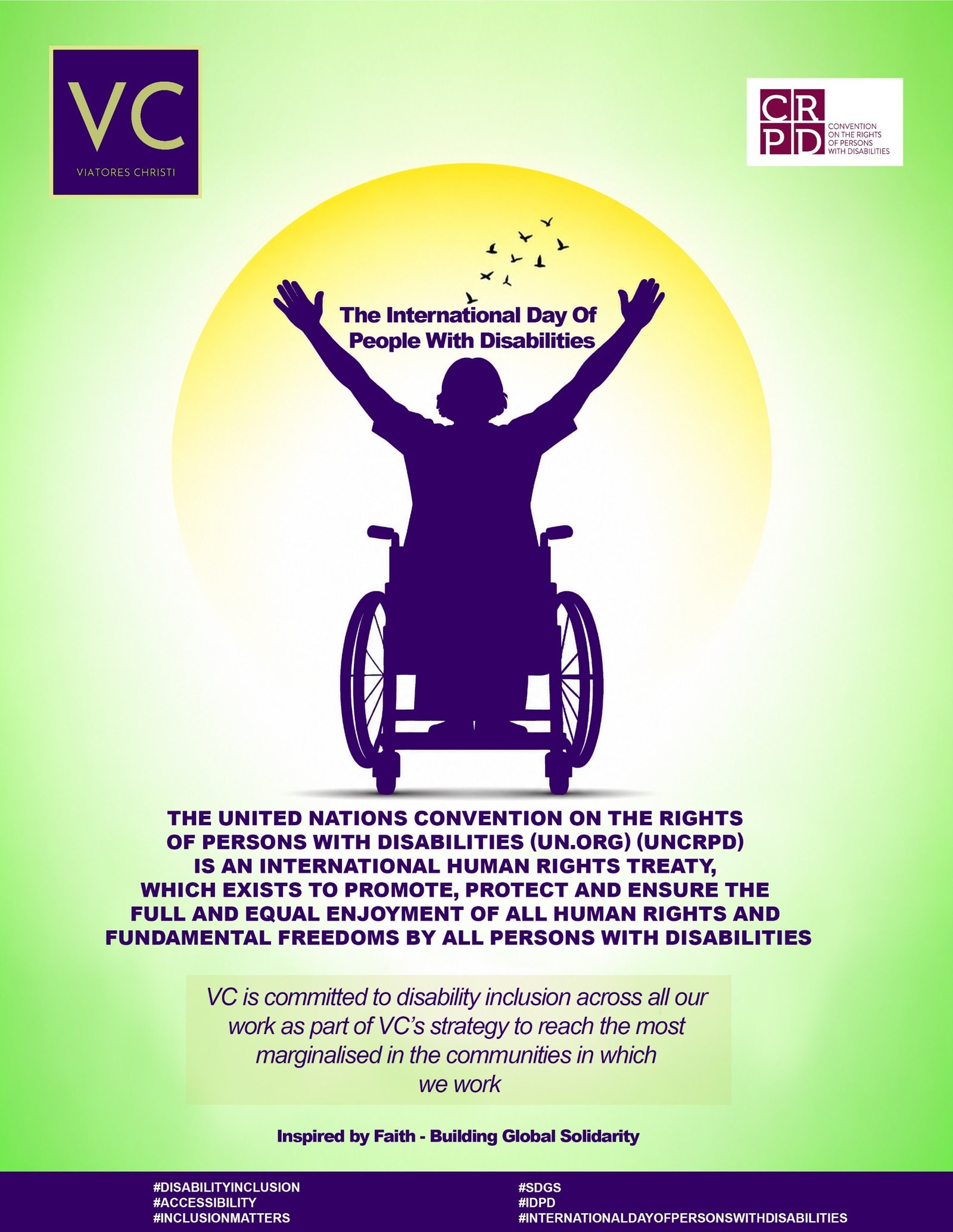 An estimated 1.3 billion people worldwide live with a significant disability – around one in six of us. Yet people with disabilities continue to face barriers that can prevent them from participating fully and equally in their families, communities and societies.
For VC, disability inclusion is not simply an issue to highlight on the International Day of Persons with Disabilities. It is an integral part of our commitment to reaching and supporting the most marginalised people in the communities where we work.
Over recent decades, there has been an important shift in how disability is understood – from viewing disability primarily as a medical issue to recognising it as a matter of human rights, equality and inclusion.
The adoption of the United Nations Convention on the Rights of Persons with Disabilities in 2006, which came into force in 2008, was a major milestone in this shift. It affirmed the rights of people with disabilities to participate fully in all aspects of society. However, significant barriers remain. These can include inaccessible buildings and transport, limited access to information and communication, discriminatory policies and legislation, and negative attitudes and stigma. Disability inclusion means identifying and removing these barriers so that everyone can participate equally.It also means ensuring that people with disabilities have a meaningful voice in decisions that affect their lives.
Disability inclusion is part of VC’s approach
VC is committed to promoting disability inclusion across all of our programmes and partnerships. Some of our partners implement projects specifically focused on disability, while others integrate disability inclusion as a cross-cutting issue within their wider programmes. Both approaches are important in ensuring that people with disabilities are not excluded from development and community initiatives.
Disability-focused programmes
VC works with partners implementing disability-specific programmes, particularly those supporting children and young people.This work can include medical intervention, rehabilitation, education, awareness-raising and community support – all aimed at enabling people with disabilities to participate more fully in their families and communities.
Disability-inclusive programmes
Disability inclusion also forms part of the work of all VC partners. We work with partners to consider disability throughout the programme cycle – from identifying needs and designing activities through to implementation and evaluation.
This means looking at:
- whether people with disabilities can access and participate in our programmes;
- what physical, communication or social barriers may prevent participation;
- how those barriers can be reduced or removed; and
- how people with disabilities can have a meaningful voice in programmes and decisions that affect them.
Our aim is to ensure that disability is considered from the outset, rather than as an afterthought.
Inclusion benefits everyone
Disability inclusion is about more than providing specific services to people with disabilities. It is about creating communities where everyone can participate, contribute and have their rights respected. It also means challenging stigma and discrimination and recognising the contribution that people with disabilities make to their families and communities. For VC, this is closely aligned with our wider commitment to reaching the most marginalised and ensuring that development is inclusive and leaves no one behind. Disability inclusion is not a one-day commitment. It is something we strive to embed across everything we do.
On the International Day of Persons with Disabilities, we reaffirm our commitment to working with our partners and communities to remove barriers, promote equality and ensure that people with disabilities have the opportunity to participate fully in the societies in which they live.